
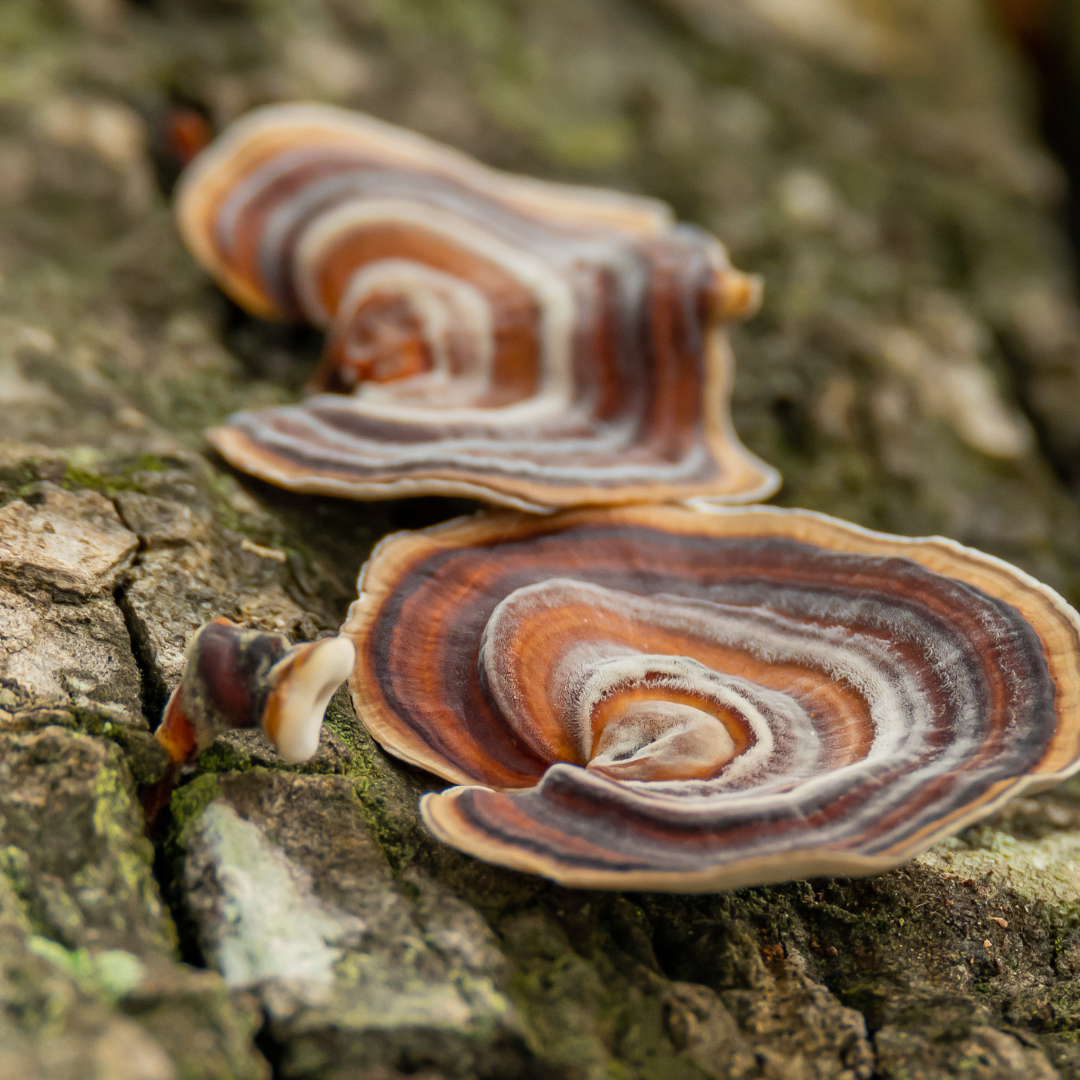
1. What Are Medicinal Mushrooms and Their Use Since Ancient Times
Medicinal mushrooms are fungi that contain biologically active compounds with potential health benefits. They have been used for centuries, especially in Asian traditional medicine systems such as Traditional Chinese Medicine (TCM) and Japanese Kampo medicine.
Historically, mushrooms like Reishi (Ganoderma lucidum), Shiitake (Lentinula edodes), Turkey Tail (Coriolus versicolor), and Cordyceps were used to support vitality, immunity, longevity, and recovery from illness. Ancient medical texts describe them as “tonic” substances that help maintain balance in the body.
In Western medicine, interest in medicinal mushrooms is more recent. However, modern research has confirmed that these organisms contain multiple bioactive molecules that may influence immune function, inflammation, metabolism, and cellular protection.
Medicinal mushrooms are now used as:
Functional foods
Nutraceuticals
Dietary supplements
Adjunctive support in integrative healthcare
Their therapeutic potential is mainly related to compounds found in the fruiting body and mycelium.


2. Why Medicinal Mushrooms Have Become So Popular Today
Several factors explain the growing popularity of medicinal mushrooms worldwide:
Increasing Interest in Natural Medicine
Patients are increasingly interested in natural approaches to health and prevention. Mushrooms are perceived as “natural” and therefore attractive to consumers seeking complementary therapies.
Chronic Disease Burden
The rise of chronic diseases such as metabolic disorders, immune dysfunction, and neurodegenerative conditions has created demand for supportive interventions that may help improve resilience and quality of life.
Scientific Validation
Research has identified important compounds such as:
Beta-glucans (polysaccharides)
Terpenoids
Phenolic compounds
Fungal immunomodulatory proteins (FIPs)
These compounds may influence immune signaling pathways, oxidative stress, and inflammatory processes.
Integrative Medicine Trend
Healthcare professionals increasingly adopt integrative approaches combining conventional treatment with evidence-based nutritional strategies. Medicinal mushrooms fit well within this model.
3. What Modern Scientific Studies Confirm
Modern research provides important insights into the mechanisms and potential clinical applications of medicinal mushrooms.
Immunomodulatory Effects
One of the most studied actions is immune modulation. Beta-glucans interact with immune cell receptors (such as dectin-1 and toll-like receptors), which may stimulate innate and adaptive immune responses.
This explains why certain mushroom extracts are studied as biological response modifiers, particularly in oncology supportive care.
Anti-Inflammatory and Antioxidant Activity
Medicinal mushrooms contain phenolic compounds and other metabolites that can reduce oxidative stress and inflammatory mediators. These effects may contribute to protection against chronic disease processes.
Potential Metabolic Benefits
Some studies suggest possible effects on lipid metabolism, glucose regulation, and cardiovascular risk factors through modulation of inflammatory cytokines and metabolic pathways.
Neuroprotective Potential
Certain mushrooms may influence neuronal growth factors and neuroinflammation, which has created interest in cognitive health and neurodegenerative disease prevention.
Oncology Support
Extracts such as polysaccharide-K (PSK) from Coriolus versicolor have been used in some countries as adjunct therapy with chemotherapy or radiotherapy. Some clinical trials show improvements in immune parameters and survival outcomes, although results are not always consistent across studies.
Important Clinical Considerations
Despite promising findings, it is important to recognize:
Many studies are preclinical (in vitro or animal models)
Human clinical trials remain limited
Standardization of extracts is critical
More high-quality randomized controlled trials are needed
Healthcare professionals should therefore interpret results cautiously and consider mushrooms mainly as supportive interventions rather than primary therapies.
4. Specialised Mushroom Complexes from Dietmed Available Through Bebetter
Healthcare professionals looking for high-quality formulations may consider specialised mushroom combinations designed for targeted health needs.
Bebetter offers medicinal mushrooms complexes from Dietmed, including:
Funghimil Immune
A formulation designed to support immune function, containing a combination of mushroom extracts such as:
Agaricus blazei
Chaga (Inonotus obliquus)
Reishi (Ganoderma lucidum)
Shiitake (Lentinula edodes)
The product also includes vitamin C, vitamin D, and zinc to support immune health.
Funghimil Neuro
A specialised combination which has the following properties: modeling, regenerating, and protective action of the nervous system, support for neurological health, increased energy and endurance, enhanced cognitive performance, neuroprotective, and stress reduction.
These products use combinations of mushrooms rather than single extracts, which may provide synergistic biological effects due to the complex mixture of active compounds.
For more information, healthcare professionals are encouraged to contact Bebetter sales representatives.
Food supplements should not replace a varied and balanced diet or a healthy lifestyle.
Healthcare professionals should evaluate individual patient needs before recommending supplements, particularly in:
Pregnancy or breastfeeding
Chronic disease
Immunosuppression
Oncology patients
Patients taking medication
Patients with known hypersensitivity to any component should avoid use.
